Will books survive because of cookbooks? Possibly, if this New York Times article is any indication:
http://www.nytimes.com/2013/01/30/dining/cookbooks-echo-with-the-wisdom-of-chefs-past.html
I laughed out loud at some of the annotations reported here - Elizabeth David is so humorous in her outspokenness in her own books, apparently more so in her marginalia - and I wanted to run and dredge out my old books, and my mother's and grandmother's recipes and commune with them.
I often think about getting everything in digital form, but there is too much history in the jottings and food smears and stuck together pages. So relieved I am not alone in this.
Tuesday, January 29, 2013


Monday, January 28, 2013
Coming Attractions
The Community Garden Network of Sonoma County
http://www.communitygardensonoma.org/
is having an event this Saturday, February 2, at Spring Hills Church on Fulton Road in Santa Rosa.
This is not quite the first event for this group, but kind of - an exploratory event to simply gather people was held last year. Now things are getting organized. Gleaning groups from around the county are going to have a table to promote our work.
And a big save the date for Sunday afternoon, March 17, for the public launch of the Interfaith Sustainable Food Collaborative, gathering congregations to network with one another and representatives of our local farms and CSAs. Details will be posted here http://www.interfaithfood.org/ and on this blog as they are firmed up.
Currently the Collaborative is working in Marin and Sonoma Counties.
http://www.communitygardensonoma.org/
is having an event this Saturday, February 2, at Spring Hills Church on Fulton Road in Santa Rosa.
This is not quite the first event for this group, but kind of - an exploratory event to simply gather people was held last year. Now things are getting organized. Gleaning groups from around the county are going to have a table to promote our work.
And a big save the date for Sunday afternoon, March 17, for the public launch of the Interfaith Sustainable Food Collaborative, gathering congregations to network with one another and representatives of our local farms and CSAs. Details will be posted here http://www.interfaithfood.org/ and on this blog as they are firmed up.
Currently the Collaborative is working in Marin and Sonoma Counties.
Does faith matter in issue advocacy?
I just read this NPR story on climate change and faith:
http://www.npr.org/blogs/itsallpolitics/2013/01/28/170484601/on-climate-change-americans-may-trust-politics-above-preachers?ft=1&f=1001
Other than the fact that the author uses "clergy" as a single noun (why do I expect more from NPR?), rather than a collective one, it's a pretty good piece, and makes some interesting points.
I wonder if the same caveats apply to sustainable food system advocacy by the faith community?
- that where people stand on the issues is influenced much more by political party than religion
and
- that we need to frame our message in terms of specific justice outcomes.
http://www.npr.org/blogs/itsallpolitics/2013/01/28/170484601/on-climate-change-americans-may-trust-politics-above-preachers?ft=1&f=1001
Other than the fact that the author uses "clergy" as a single noun (why do I expect more from NPR?), rather than a collective one, it's a pretty good piece, and makes some interesting points.
I wonder if the same caveats apply to sustainable food system advocacy by the faith community?
- that where people stand on the issues is influenced much more by political party than religion
and
- that we need to frame our message in terms of specific justice outcomes.
Thursday, January 3, 2013
What didn't happen with the Farm Bill
Part of the cliff-avoidance legislative package left much of our agriculture sector still standing on the edge.
The 2008 Farm Bill was renewed until September. Doesn't sound bad until you realize that no change is a reactionary move. The kinds of programs we'd hoped to see more of - in support of small farms, conservation, generational transition among farmers, etc. aren't going to happen any time soon. Subsidies of conventional crops, some of which are now seen as not much needed even by the farmers, will continue.
Here's a short story from this morning on NPR
http://www.npr.org/2013/01/03/168515101/farmers-frustrated-by-farm-bill-extension
Why did this happen? Because even though the Sentate passed a new and more progressive farm bill in early summer, and the House Agriculture community moved it along, House leadership failed to bring it to the floor. So are all those rural folks going to continue to vote Republican? Why?
Many ag advocacy organizations worked for a modified extension. We here of the Interfaith Sustainable Agriculture Collaborative signed on. But it just didn't have the traction needed.
The National Sustainable Agriculture Coalition called the extension of the 2008 bill "awful" - which I think is more disparaging than using profanity would have been.
A quick internet search revealed that both sustainable and conventional agriculture leadership are complaining. Conventional dairy farmers got caught in the price fixing bind. Consumers may celebrate that milk prices do not rise, but it's inevitable that they will eventually as more dairymen and women go out of business.
A few useful programs in the 2008 bill had been unfunded since the fall - but they were refunded by this extension. Some of them are even programs that help reduce negative environmental impacts of farming. And SNAP is fully funded again for now, though the fiscal reactionaries are breathing fire in its direction.
The 2008 Farm Bill was renewed until September. Doesn't sound bad until you realize that no change is a reactionary move. The kinds of programs we'd hoped to see more of - in support of small farms, conservation, generational transition among farmers, etc. aren't going to happen any time soon. Subsidies of conventional crops, some of which are now seen as not much needed even by the farmers, will continue.
Here's a short story from this morning on NPR
http://www.npr.org/2013/01/03/168515101/farmers-frustrated-by-farm-bill-extension
Why did this happen? Because even though the Sentate passed a new and more progressive farm bill in early summer, and the House Agriculture community moved it along, House leadership failed to bring it to the floor. So are all those rural folks going to continue to vote Republican? Why?
Many ag advocacy organizations worked for a modified extension. We here of the Interfaith Sustainable Agriculture Collaborative signed on. But it just didn't have the traction needed.
The National Sustainable Agriculture Coalition called the extension of the 2008 bill "awful" - which I think is more disparaging than using profanity would have been.
A quick internet search revealed that both sustainable and conventional agriculture leadership are complaining. Conventional dairy farmers got caught in the price fixing bind. Consumers may celebrate that milk prices do not rise, but it's inevitable that they will eventually as more dairymen and women go out of business.
A few useful programs in the 2008 bill had been unfunded since the fall - but they were refunded by this extension. Some of them are even programs that help reduce negative environmental impacts of farming. And SNAP is fully funded again for now, though the fiscal reactionaries are breathing fire in its direction.
Monday, December 31, 2012
2012 in review
How instructive to look back through my calendar and this blog and see what was accomplished (and not) this year. Seems like I have not been paying as much attention to issues at the national and global levels, but I have also done more than in any previous year locally.
In January I did a late glean of some persimmons, and not much else.
In February the meeting schedule heated up. I planted some peas in my plot and started tomato and pepper seeds inside. Our clergy conference on wellness left a whole lot to be desired from the food perspective. What we ate was pretty good and some local, but the information about diet was devoid of any eco-justice awareness.
In March I began helping with stakeholder interviews for the Food Action Plan, and the communication committee of the Food System Alliance began meeting. Joe Valentine contacted me about his interest in gleaning, and I had a first meeting with Steve Schwartz about interfaith plans. I wondered why there were so few people from ag advocacy and food system organizations at the Volunteer Center's non-profit conference.
In April interviews and communication planning for the Alliance continued, and I gave away lots of plants, mostly tomatoes, for Earth Day at Trinity.
May was meeting heavy. I found myself missing a lot of meetings at my community garden because of so many other Saturday commitments.
June brought the beginning of meetings with folks forming the county Community Garden Network, lots of meetings and interviews for the gleaning project, and some writing of introductory materials for the Food Action Plan.
July was filled with still more meetings, interviews and schmoozing activities to drum up interest in gleaning. We enlisted the support of the Community Center and the Sonoma Valley Granged. I made my debut on Mornings in Sonoma as part of the launch.
In August we finally had an introductory meeting with gleaners and formally launched the Sonoma Valley Gleaning Project - on a way too hot evening for a room with too few fans and no A/C. First gleans were backyard table grapes and model vegetable plots at Cornerstone. August also was the beginning of tabling season, promoting the Alliance and its members at the county fair and Gravenstein Fair. I wrote some quiz questions about Sonoma County ag which we used to attract attention. Meanwhile, we began our preserving parties at Trinity with zucchini pickles and relish.
The first day of September El Dorado County Master Preservers did a demo on canning fall fruit at Trinity, and late in the month we had a jam session. We tweaked the recipe I'd found last year for tomato apple jam, and between church and home kitchens probably made way too much of it! Definitely the food trend of the year among Sonoma Episcopalians. We continued gleaning - mostly apples. I volunteered at the second annual Heirloom Expo. I met with some others in the deacon community and inspired some more gleaning and other food justice efforts around California. The Food System Alliance approved the Food Action Plan. The Interfaith Sustainable Food Collaborative was launched. And I wrapped up the month by cooking for a small retreat in 100 degree weather.
Gleaning moved from late apples to figs and walnuts in October. I created a display for the produce swap at the Sonoma Valley Grange (a partner in the gleaning project) Harvest Fair. The Food Action Plan was approved by the Sonoma County Board of Supervisors. It's hard to say what was the most fun: gleaning on beautiful autumn days, enjoying the harvest from my garden, or attending the sustainable food and wine hearing which State Senator Noreen Evans convened. I looked around that large hearing room at the city offices and, realizing how many I knew, thought, ah, these are my people.
In November the gleaning of harder to place produce began - things like persimmons and quinces. When you have to cook something it is not nearly as attractive to food programs and their clients and guests. I applaud Sonoma Valley Teen Services, where the teaching of cooking and nutrition has educated a group of young people who accept the challenge of trying anything in their small commercial kitchen. November also brought an opportunity to talk with a realtor friend about how the real estate community might cooperate with gleaning efforts around the county. I wonder what will happen with this? I was more successful at connecting folks from Gridley involved with agriculture development in Liberia with Ecology Action interns. Seems significant that this happened at a deacon's ordination. But again, I wait to see what happens next. How will these seeds grow?
As December began I realized that we had completed one full year of Food of the Month at Trinity. I noted today that I didn't always post my copy on each month's item here. We wrapped up November with masa harina, and began again with peanut butter. December is also the season of never leaving home without food - something baked with local fruit or nuts, or a preserve and some local cheese for the cheese board. And as we look to the new year, the Food Action Plan roll out begins to pick up speed as we seek endorsements from municipalities, businesses and organizations.
The Sonoma Valley Gleaning Project ended its first year (five months, really) with 1129 pounds gleaned, by 17 different volunteers, from 16 donors, on 20 occasions, to 6 local organizations.
What a year of local activity. But as I checked just now (could it have changed at the last minute?) the U.S. still doesn't have a farm bill, or even the extension of the 2008 version set to expire at midnight (in which time zone?)
In January I did a late glean of some persimmons, and not much else.
In February the meeting schedule heated up. I planted some peas in my plot and started tomato and pepper seeds inside. Our clergy conference on wellness left a whole lot to be desired from the food perspective. What we ate was pretty good and some local, but the information about diet was devoid of any eco-justice awareness.
In March I began helping with stakeholder interviews for the Food Action Plan, and the communication committee of the Food System Alliance began meeting. Joe Valentine contacted me about his interest in gleaning, and I had a first meeting with Steve Schwartz about interfaith plans. I wondered why there were so few people from ag advocacy and food system organizations at the Volunteer Center's non-profit conference.
In April interviews and communication planning for the Alliance continued, and I gave away lots of plants, mostly tomatoes, for Earth Day at Trinity.
May was meeting heavy. I found myself missing a lot of meetings at my community garden because of so many other Saturday commitments.
June brought the beginning of meetings with folks forming the county Community Garden Network, lots of meetings and interviews for the gleaning project, and some writing of introductory materials for the Food Action Plan.
July was filled with still more meetings, interviews and schmoozing activities to drum up interest in gleaning. We enlisted the support of the Community Center and the Sonoma Valley Granged. I made my debut on Mornings in Sonoma as part of the launch.
In August we finally had an introductory meeting with gleaners and formally launched the Sonoma Valley Gleaning Project - on a way too hot evening for a room with too few fans and no A/C. First gleans were backyard table grapes and model vegetable plots at Cornerstone. August also was the beginning of tabling season, promoting the Alliance and its members at the county fair and Gravenstein Fair. I wrote some quiz questions about Sonoma County ag which we used to attract attention. Meanwhile, we began our preserving parties at Trinity with zucchini pickles and relish.
The first day of September El Dorado County Master Preservers did a demo on canning fall fruit at Trinity, and late in the month we had a jam session. We tweaked the recipe I'd found last year for tomato apple jam, and between church and home kitchens probably made way too much of it! Definitely the food trend of the year among Sonoma Episcopalians. We continued gleaning - mostly apples. I volunteered at the second annual Heirloom Expo. I met with some others in the deacon community and inspired some more gleaning and other food justice efforts around California. The Food System Alliance approved the Food Action Plan. The Interfaith Sustainable Food Collaborative was launched. And I wrapped up the month by cooking for a small retreat in 100 degree weather.
Gleaning moved from late apples to figs and walnuts in October. I created a display for the produce swap at the Sonoma Valley Grange (a partner in the gleaning project) Harvest Fair. The Food Action Plan was approved by the Sonoma County Board of Supervisors. It's hard to say what was the most fun: gleaning on beautiful autumn days, enjoying the harvest from my garden, or attending the sustainable food and wine hearing which State Senator Noreen Evans convened. I looked around that large hearing room at the city offices and, realizing how many I knew, thought, ah, these are my people.
In November the gleaning of harder to place produce began - things like persimmons and quinces. When you have to cook something it is not nearly as attractive to food programs and their clients and guests. I applaud Sonoma Valley Teen Services, where the teaching of cooking and nutrition has educated a group of young people who accept the challenge of trying anything in their small commercial kitchen. November also brought an opportunity to talk with a realtor friend about how the real estate community might cooperate with gleaning efforts around the county. I wonder what will happen with this? I was more successful at connecting folks from Gridley involved with agriculture development in Liberia with Ecology Action interns. Seems significant that this happened at a deacon's ordination. But again, I wait to see what happens next. How will these seeds grow?
As December began I realized that we had completed one full year of Food of the Month at Trinity. I noted today that I didn't always post my copy on each month's item here. We wrapped up November with masa harina, and began again with peanut butter. December is also the season of never leaving home without food - something baked with local fruit or nuts, or a preserve and some local cheese for the cheese board. And as we look to the new year, the Food Action Plan roll out begins to pick up speed as we seek endorsements from municipalities, businesses and organizations.
The Sonoma Valley Gleaning Project ended its first year (five months, really) with 1129 pounds gleaned, by 17 different volunteers, from 16 donors, on 20 occasions, to 6 local organizations.
What a year of local activity. But as I checked just now (could it have changed at the last minute?) the U.S. still doesn't have a farm bill, or even the extension of the 2008 version set to expire at midnight (in which time zone?)
Thursday, December 20, 2012
Food Action Plan roll out
Our Sonoma County Food Action Plan, which was accepted by the Board of Supervisors in late October, is beginning to make its way in the media and among movers and shakers. Here's the perspective from our alternative weekly:
http://www.bohemian.com/northbay/local-food-inc/Content?oid=2332697
Tomorrow I am taking one of the limited run print copies of the plan to Sonoma's pro tem mayor when I appear on his radio show to give a report on the gleaning project. We are beginning to seek endorsement from municipalities, businesses and ngos.
You can see the full report here:
http://aginnovations.org/images/uploads/FAP_Final.pdf
A heads up, though - it's a massive download.
http://www.bohemian.com/northbay/local-food-inc/Content?oid=2332697
Tomorrow I am taking one of the limited run print copies of the plan to Sonoma's pro tem mayor when I appear on his radio show to give a report on the gleaning project. We are beginning to seek endorsement from municipalities, businesses and ngos.
You can see the full report here:
http://aginnovations.org/images/uploads/FAP_Final.pdf
A heads up, though - it's a massive download.
Tuesday, December 18, 2012
Death by cheese?
There have been many things on my mind over the last few weeks, and many distractions. I think I may attempt a year in review some time soon.
Meanwhile, it is true. You cannot buy young imported cheeses made from raw milk in the U.S., but you can buy an automatic weapon. Which is more dangerous to your health?
Sorry I can't figure out how to resize this image.
The details are parsed in this article on the Huffpost.
http://www.huffingtonpost.com/2012/07/23/automatic-weapon-french-cheese-gun-control_n_1696200.html?utm_hp_ref=fb&src=sp&comm_ref=false
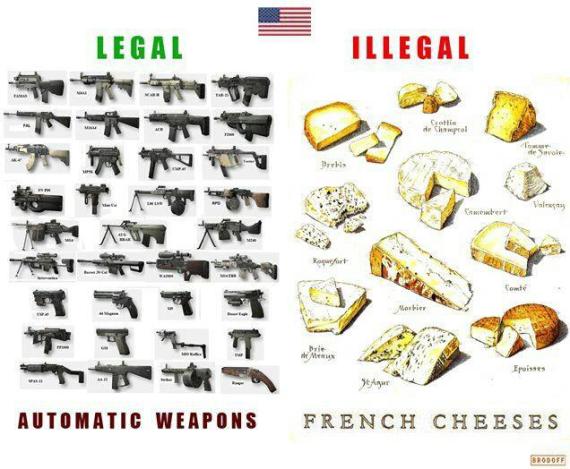
Meanwhile, it is true. You cannot buy young imported cheeses made from raw milk in the U.S., but you can buy an automatic weapon. Which is more dangerous to your health?
Sorry I can't figure out how to resize this image.
The details are parsed in this article on the Huffpost.
http://www.huffingtonpost.com/2012/07/23/automatic-weapon-french-cheese-gun-control_n_1696200.html?utm_hp_ref=fb&src=sp&comm_ref=false
Subscribe to:
Posts (Atom)